Home » TANZANIA SAFARIS, TANZANIA SAFARI TOURS, SAFARIS IN TANZANIA
TANZANIA SAFARIS, TANZANIA SAFARI TOURS, SAFARIS IN TANZANIA
Embark on Tanzania safaris and get an opportunity to behold what the largest country in East Africa holds. From the depths of Lake Tanganyika to Africa’s highest peaks (Mt. Kilimanjaro), Tanzania has got you covered.
Tanzania offers a diverse range of safari itineraries, typically lasting between 3 and 14 days. These are tailored to meet individuals’ preferences and interests.
Safari itineraries can be customized to include a variety of specialty experiences, such as walking safaris, cultural visits, game drives, camping excursions, and aerial excursions.
Many of the Tanzania tours offer a combination of national parks to provide a comprehensive safari adventure, and among the famous parks are Ruaha National Park, known for a large population of elephants and predators, Serengeti National Park, Tarangire NP, and other places like Ngorongoro Crater.
Tanzania is famous for the annual migration of wildebeest, which is a spectacular natural phenomenon where over two million wildebeest, zebra, and other grazing animals traverse the Serengeti. It is one of the few events that make an African safari more interesting.
Besides being known for its annual wildebeest migration, it has the largest concentration of Africa’s wildlife and the world’s largest population of lions, and it is a prime destination for viewing the Big Five.
Most of the safari tours in Tanzania start from Arusha, which is a common gateway for tours to several national parks, including Tarangire NP, Mt. Kilimanjaro NP, Lake Manyara NP, and Arusha NP, among others, in the northern circuit.
Mikumi NP acts as a gateway to the southern circuit, and among other southern parks are Ruaha NP, Udzungwa Mountains NP, and Nyerere NP, among others, which offer a unique safari experience off the beaten track.
Top Travel Destinations to Visit on a Tanzania Safari
There are many popular destinations for a vacation in Tanzania, and they include the following:
Serengeti National Park
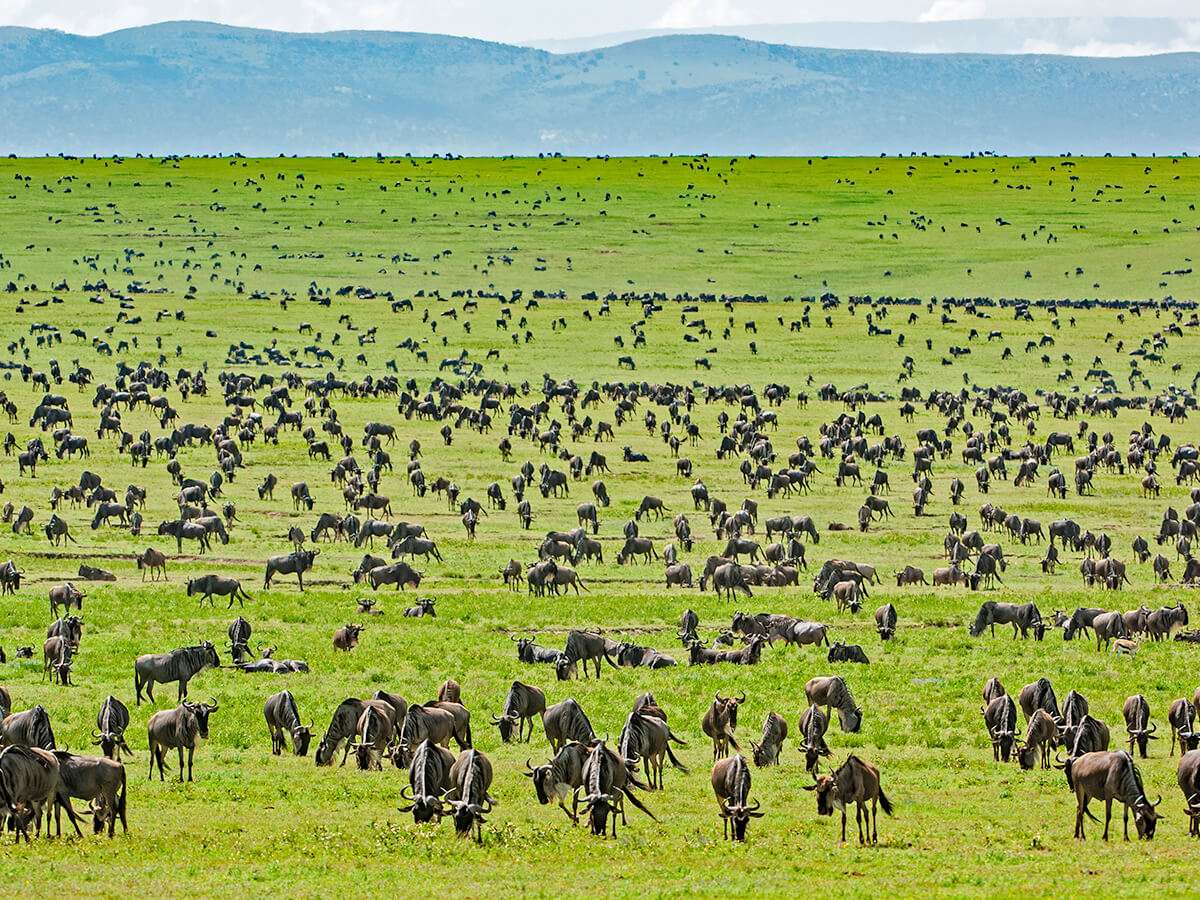
Serengeti National Park is one of the most popular travel destinations in the northern circuit that must be visited on a Tanzania safari tour.
It was first established as a partial game reserve in 1921 due to increasing cases of hunting, and became a full one in 1929. Due to its diverse wildlife and need for legal protection of wildlife, it was later made a game park in 1951.
Serengeti NP is located in the Simiyu region, near the Kenyan border, covering an area of 14,763 km², making it the third largest game park in Tanzania.
It is known for its vast plains and is the primary destination for witnessing the Great Migration, which is a spectacular event that should not be missed on any Tanzania safari.
This migration involves over two million animals, including zebras and gazelles, migrating in a clockwise direction across Tanzania and Kenya each year.
Wildebeests, zebras, gazelles, and elands are the common beasts in this great migration, with the wildebeest having the highest numbers, and they migrate in search of fresh grass and water.
Visitors usually witness the great migration in different regions and at different time in the northerns Serengeti (July to October)-river crossing to Masai Mara National Reserve, in southern Serengeti (December to March)-calving season in the Ndutu Plains, Western Corridor (May to June) herds move to north and cross River Grumeti and central Serengeti (April to June)-transitional area when herds spread out their movement.
This park is also home to iconic wildlife, including big cats, elephants, buffalo, over 200,000 zebras, hyenas, crocodiles, and other fauna.
Over 500 bird species inhabit the park, and they include ostriches, secretary birds, kori bustards, etc. You will also see other attractions like scattered hills and different tree species.
Interesting things to do in the park include camping in a mobile camp, bush walks, and wildlife viewing, which includes watching the great migration of wildebeest.
Ngorongoro Conservation Area
The Ngorongoro Conservation Area (NCA) is another popular place to travel to when on a Tanzania journey. It was established in 1959 as a multiple land use area with various wildlife coexisting with the semi-nomadic pastoralists grazing their livestock.
This protected area is located in the Ngorongoro District, about 180 km² west of Arusha City in the Arusha region.
It covers an area of about 8288 km², which makes it rank amongst the largest conservation areas in the world, with streams, forests, craters, and savannah grassland and woodland.
It was inscribed as a UNESCO World Heritage Site in 1979 for its outstanding natural value.
In this vast conservation area, there is a prominent feature, the Ngorongoro Crater, which is the world’s largest intact and unfilled volcanic caldera. For this reason, Ngorongoro Crater is grouped among the Seven Natural Wonders in Africa.
The Ngorongoro Crater Area is known for harboring nearly all of East Africa’s iconic species and its breathtaking natural beauty. This is why it is referred to as Africa’s Garden of Eden.
There are numerous things to see in the whole protected area, including beasts like wild dogs, zebras, golden jackals, and serval cats, among others.
It is also home to abundant birdlife, which includes the common ostrich, fulvous whistling duck, white-faced Egyptian goose, knob-billed duck, African black duck, and helmeted guineafowl. These and many others are worth seeing on a Tanzania birding tour.
You will also see stunning landscapes like Oldeani Mountain, Olduvai Gorge, Crater, shifting dunes, hot springs, and Empakaai Crater, among others.
While in this conservation area, tourists can engage in game drives, hot air ballooning, cultural visits, and hiking to the Ngorongoro Crater rim, Empakaai Crater, Olmoti Crater, and other landforms.
Lake Manyara National Park
Lake Manyara National Park is among the popular places to visit on Tanzania safari tours in the northern circuit on the edge of the Rift Valley.
It was first established in 1957 as a game reserve and later as a game park in 1960 to protect the diverse ecosystems and the numerous flamingo birds that normally gather near the shores of L. Manyara.
This park is located about 126 kilometers southwest of Arusha City, and it covers about 325 km².
Lake Manyara NP is famous for being home to tree-climbing lions, a large concentration of elephants, and millions of flamingos, plus other bird species.
It is also renowned for having the highest number of olive baboons in Tanzania, thereby making it one of the best places for wildlife excursions in Tanzania.
Other beasts to see in Lake Manyara NP include hyenas, warthogs, giraffes, klipspringers, zebras, gazelles, etc.
A high population of flamingos is found at Lake Manyara because of the presence of algae that they normally feed on. This makes Lake Manyara NP one of the most popular destinations for bird watching in Tanzania.
Some of the top activities to do in this park include bird watching, game drives, guided nature walks, boat or canoe rides, and community visits, among others.
Tarangire National Park
Tarangire National Park, which is in northern Tanzania, about 120 km southwest of Arusha City, is among the top travel destinations to visit when on an adventure tour in Tanzania.
The park is also situated between the Maasai Steppe and the Great Rift Valley lakes, like L. Manyara.
Tarangire National Park is the sixth-largest game park in Tanzania, covering an area of 2600 km². It was first established as a game reserve in 1957 and later as a game park in 1970 to preserve its unique ecosystem and biodiversity.
This park is famous for its population of elephants, unique baobab trees, and diverse birdlife.
Other fauna includes warthog, cheetah, eland, tree-climbing lion, African wild dog, leopard, hyena, etc. Lions in Tarangire occasionally climb trees for relief from the heat.
The park is also home to over 500 bird species that are worth seeing on a Tanzania birding tour.
Besides the beasts and birds, other attractions in Tarangire NP include the Tarangire River, Silale Swamp, and Kitibong Hill.
Some of the fun activities at this park include wildlife viewing, bird watching, bush walks, and game drives, among others.
Nyerere National Park (Formerly Selous Game Reserve)
Nyerere National Park, which is among the southern circuit parks, is a must-visit game park when on a Tanzania journey.
It is Tanzania’s largest national park, located in the Miombo woodlands in the southern parts of the country, offering a wildlife safari experience.
It was first established as Selous Game Reserve in 1922, and it was initially the largest protected area in Africa, covering about 50,000 km². However, in 2019, two-thirds of the reserve (30,000 km²) was upgraded to national park status, thereby forming Nyerere NP.
Nyerere NP is home to diverse wildlife, including large herds of elephants, lions, wild dogs, and over 440 bird species.
Visitors can also see the Rufiji River, Stiegler’s Gorge, and Lake Tagalala, among other attractions.
Some things to do in this park include bird watching, game drives, nature walks, boat rides, and game viewing, among others.
Mount Kilimanjaro National Park
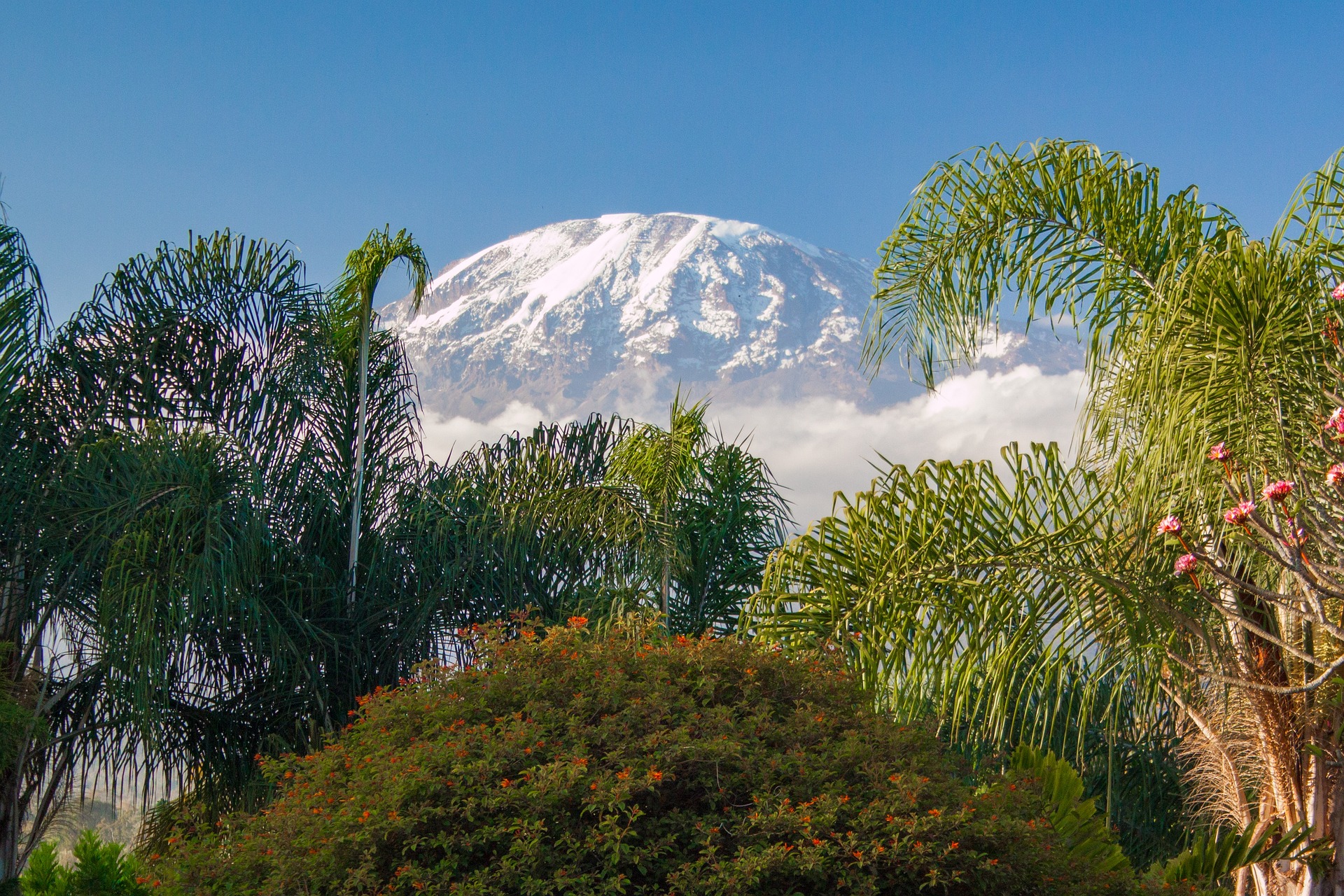
Mount Kilimanjaro National Park, located about 300 kilometers south of the equator in the Kilimanjaro region, is a must-visit place when on a holiday in Tanzania.
It is among the parks in the northern circuit, and it was first established as a game reserve in 1921 and later as a game park in 1973.
It covers 1,688 square kilometers, and this area includes Mt. Kilimanjaro, which is the main attraction in the park, making it the best destination for mountain climbing in Tanzania.
Besides Mt. Kilimanjaro, other attractions in the Mount Kilimanjaro NP include stunning landscapes like the Shira Plateau and Lake Chala. Beasts in this park include bushbucks, leopards, warthogs, colobus monkeys, and more.
Mount Kilimanjaro NP is also home to over 179 bird species, which make this park a birder’s haven for Tanzania birding tours, especially from November to April.
Interesting things to do in this park include bird watching, game viewing, nature walks, visiting the coffee plantations, and climbing Mt. Kilimanjaro, among others.
Arusha National Park
Arusha National Park, located in northeastern Tanzania near Arusha Town, close to the KE-TZ border, is among the top safari destinations to travel to when on a Tanzania trip.
It was established in 1960 as Ngurdoto National Park and later changed to Arusha National Park in 1967. It was gazetted to conserve the ecosystems and protect the flora and fauna and maintain the beauty of the area, including crater lakes, Mount Meru, and various animal habitats.
This park is considered to be the second-oldest park in Tanzania, and it is among the smallest parks in the country, covering an area of about 137 km².
Despite its small size, it is home to numerous beasts, including giraffe, elephant, Cape buffalo, bushbuck, zebra, warthog, the blue monkey, and black-and-white colobus monkey, among others.
It is also home to over 400 bird species, including speckled mousebirds, sunbirds, ring-necked doves, pied crows, etc., making it a popular spot for birding tours in Tanzania.
Interesting things to do in this park include climbing Mount Meru, canoeing on the Momela Lakes, bird watching, game viewing, nature walks, and many more.
Other Travel Destinations to Visit on a Tanzania Holiday
| Gombe NP | Udzungwa Mountains NP | Mafia Island |
| Mikumi NP | Mkomazi NP | Dar es Salaam City |
| Mahale NP | Saadani NP | Nungwi Beach |
| Katavi NP | Kondoa Rock-Art Sites | Prison Island |
| Zanzibar Marine Park | Pemba Island | Cultural Heritage Centre in Arusha |
| Kikulewa Hot Springs | Stone Town |
Top Things to See on a Tanzania Safari
There are numerous things to see when on a Tanzania safari tour that will make it memorable.
Wild Animals in Tanzania
With over 346 mammal species, Tanzania is considered to have the highest concentration of animals per square kilometer in the world.
There are over 4 million beasts, including herbivores, carnivores, primates, and reptiles, worth seeing on a Tanzania wildlife safari.
Herbivores—These include elephants, wildebeests, zebras, antelopes, gazelles, giraffes, buffaloes, and elands, among others.
Carnivores—These include lions, wild dogs, caracals, leopards, jackals, mongooses, civets, cheetahs, etc.
Primate Species—These include vervet monkeys, eastern chimpanzees, red-tailed monkeys, red colobus monkeys, olive baboons, and blue monkeys.
Reptile Species—Among the reptiles are snakes (such as the African rock python, mambas, and cobras), geckos, skinks, and agamas, among others.
These are found in areas like Mahale Mountains NP and Gombe Stream NP, among other places.
Bird Species in Tanzania
Tanzania has over 1100 bird species, including both resident and migratory, inhabiting the different ecosystems.
Some of the Tanzania birds include large flocks of flamingos, ostriches, grey crowned cranes, lilac-breasted rollers, black-headed herons, Cape teals, red-billed ducks, pink-backed pelicans, spur-winged geese, knob-billed ducks, Egyptian geese, Kori bustards, and Fischer’s lovebirds, among other bird species.
Some of these bird species are found in almost every protected area.
Lakes in Tanzania
Tanzania has over 49 lakes, and the list includes three large lakes in Africa, which are Lake Victoria, Lake Tanganyika, and Lake Nyasa (Malawi).
Other lakes include L. Manyara, Lake Rukwa, Lake Eyasi, Lake Natron, Lake Chala, Lake Jipe, Lake Burigi, Lake Ambussel, Lake Babati, etc.
Rivers in Tanzania
There are numerous epic rivers supporting flora and fauna in Tanzania, and among them are the Zambezi River, the Great Ruaha River, the River Pangani, the River Ruvuma, the River Rufiji, the River Wami, White Nile River, the River Malagarasi, the Congo River, etc.
Islands in Tanzania
On a Tanzania vacation, you will have an opportunity to spend your leisure time relaxing on the islands. They include
Mafia Island—It is a small island covering about 435 km², accommodating about 41,000 people. It is renowned for its outstanding coral reef sites and pristine beaches, and it offers intriguing activities like sport fishing.
Pemba Island—It is located in the Indian Ocean and is part of the Zanzibar Archipelago, covering about 988 km² at an elevation of 119 meters. It is renowned for lush clove gardens, sea fans, coral gardens, and pristine beaches.
Prison Island—This is the smallest island, covering about 5.6 square kilometers, north of Stone Town. It is home to a big population of tortoises and the ruins of a former prison.
Zanzibar Island—It is the largest island in Tanzania, located in the Indian Ocean, covering an area of 1,666 km². It is renowned for its stunning white sand beaches, warm waters, and the historical Stone Town.
Zanzibar is also known for having top-ranking accommodations ranging from luxury resorts to boutique hotels for tourists who would spend their leisure time on this island.
Mountains in Tanzania
Majestic mountains are also among the popular things to see when on a holiday in Tanzania. These include
Mt. Meru (4565 meters), Mt. Kilimanjaro (5895 meters), Mt. Mawenzi (4565.9 meters), Mount Meru (5148.07 meters), Klute Peak (3953.3 meters), Mount Hanang (3419.9 meters), Mount Luhombero (2575.6 meters), Mount Sisaba (2462.8 meters), Mount Selegu (2456.7 meters), Mount Sibindi (2371.4 meters), and Ol Doinyo Lengai (2877.3 meters).
Interesting Things to Do on a Tanzania Vacation
When on a Tanzania vacation, you will have an opportunity to engage in various activities in the different travel destinations. These activities include
Game Drives Especially in The Ngorongoro Crater Area
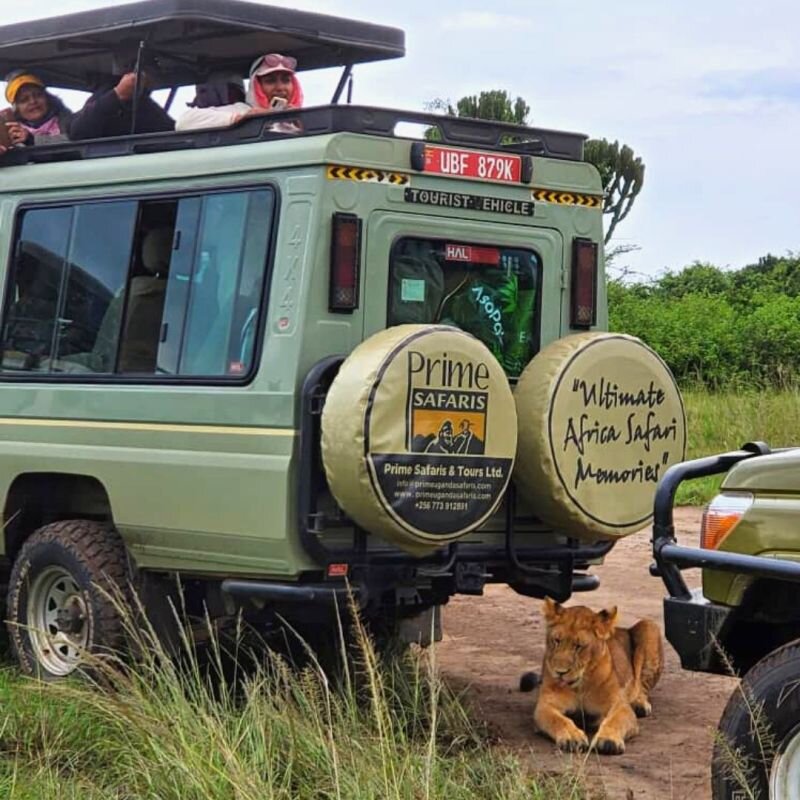
Game drives involve exploring different parts of protected areas, and these tours often utilize custom-built 4X4 open-roof safari vehicles to enhance game viewing with the help of professional driver guides.
Among the commonly spotted beasts on a game drive are elephants, giraffes, buffalo, and antelopes, among others.
Other places where game drives take place include the famed Serengeti NP, Tarangire NP, Lake Manyara NP, Nyerere NP, and Mikumi NP, among others.
Witnessing the Great Migration
The great migration is considered to be the largest migration of beasts in the world, and it takes place in the Serengeti NP.
The herds of wildebeests, zebras, elands, and gazelles are mainly found in the Serengeti plains in Southern Tanzania from December through early March.
From April to May, the herds begin their trek north across the western and central Serengeti during the long rains.
From June to July, the herds are grazing their way through the Serengeti’s western corridor towards the Masai Mara National Reserve.
Bird Watching

Bird watching is among the commonly done activities by tourists on a Tanzania tour.
There are over 1110 bird species worth seeing on a Tanzania birding safari, which makes it a birder’s haven.
Common bird species include the African fish eagle, black-headed heron, Cape teal, red-billed Duck, lesser flamingo, pink-backed pelican, spur-winged goose, knob-billed Duck, Egyptian goose, Kori bustard, and Fischer’s lovebird, among others.
Popular birding spots in Tanzania include Lake Manyara NP, Tarangire NP, Arusha NP, Mt. Kilimanjaro National Park, Rubondo Island NP, Lake Victoria, Lake Natron, Lake Eyasi, etc.
Nature Walks
Nature walks involve trekking to different parts of the wildlife areas, allowing travelers to explore wildlife up close.
This activity is done with the help of a tour guide who will enhance your experience on a tour by providing valuable insights about the flora and fauna.
When on a nature walk, you will learn about different plant species, some of which have medicinal properties, and the behavior of some beasts and birds.
Nature walks take place in Nyerere NP, Mikumi NP, Tarangire NP, Mahale Mountains NP, Udzungwa Mountains NP, and Ruaha NP, among others.
Camping
Camping involves tourists getting closer to nature by sleeping outdoors and listening to the sounds of the wild, which offers a deeper connection with the environment.
Some tourists engage in fly camping, where mobile camps are set for just a night or two to have a more immersive, raw, and close-to-nature experience.
Game parks with campsites include Arusha NP, Ruaha NP, Mikumi NP, Tarangire NP, Serengeti NP, and others.
Hot Air Balloon Ride
Hot air ballooning is a unique aerial experience that provides a bird’s-eye view of the landscapes and flora, and fauna in the different places to visit.
These rides typically last for about an hour, and they normally start early morning at sunrise or two to three hours before sunset because these times have the most stable air and lightest winds.
The rides take place in Serengeti NP, Tarangire NP, and Ngorongoro Crater.
Cultural Tours
Tanzania offers opportunities for cultural tours to experience local culture and natural beauty more intimately.
During these cultural tours, participants can get insight into the lives and rituals of various tribes in Tanzania.
Travelers on a cultural tour can take a tour around the Maasai villages, like the Maasai Boma, which preserves the Maasai cultural traditions. Here, tourists will experience Maasai culture and gain a well-rounded understanding of Tanzanian heritage.
During these cultural tours, the Maasai villagers demonstrate the spear-throwing and bow-and-arrow techniques.
Travelers can choose to meet the Hadza people, who are among the last hunter-gatherers in Africa, for cultural insight.
Besides villages, tourists can also have a tour around urban centers, where they can attend local festivals and experience urban cultural activities like performances and enjoy street food, among other fun things.
Many of the cultural tours include visiting community projects such as the local bike shops that empower local women, and engaging in community projects offers visitors a chance to directly contribute to local development while enjoying their travels.
Cultural experiences in Tanzania also include visits to local primary schools to interact with children and teachers.
On the same cultural safari, tourists can learn about lion conservation efforts while engaging with the locals.
Categories of Safaris in Tanzania
Tanzania has budget, mid-range, and luxury safaris available for travelers.
Budget Safaris
This category focuses on affordability by providing and prioritizing only what is considered to be essential for a journey.
Budget excursions include camping at public or designated camping areas near or inside the game parks. At the campsite, there are basic facilities that are often shared, e.g., shared toilets.
Lower transport costs are charged since the transport means are shared.
Budget excursions are mostly booked during the low seasons when most of the Tanzania tour packages are offered at a discount.
Mid-Range Safaris
Mid-range tours in Tanzania provide a balance between budget and luxury tours.
The Mid-range lodges and tented camps offer comfortable accommodation with a mix of amenities like free internet access, private bathrooms, and excellent services.
Visitors on Mid-range excursions have opportunities to visit iconic parks and conservation areas such as Serengeti National Park, Tarangire NP, and the Ngorongoro Crater.
Meals often consist of a buffet-style selection of both local and international foods.
Booking for a midrange safari can be done either in the low season or in the peak season.
Luxury Safaris
Luxury safaris in Tanzania offer a high-end, personalized travel experience that focuses on comfort, exclusivity, and service in the wilderness of Africa.
These high-end excursions are customized to fit individual preferences. They feature high-end accommodations, a private guide, bespoke tours, a personalized vehicle for greater flexibility and comfort, access to private reserves, and special experiences like hot air ballooning, night drives, and walking safaris.
Luxury safari tours also provide unique experiences, like a private picnic lunch. For those interested in camping, a mobile tented camp is available to offer a unique wilderness experience.
They include private guided tours, which offer travelers the flexibility to choose their own pace and itinerary. They also include additional services like private air travel to various parks, which increases convenience.
Booking a luxury excursion early is recommended, especially during peak season.
How to Get to Tanzania for Different Excursions?
By Air
Travelers on a Tanzania trip fly into Julius Nyerere International Airport (DAR) in Dar es Salaam for the southern parks, and those interested in northern circuit parks can fly into Kilimanjaro International Airport (JRO) near Arusha.
From any of these airports, a domestic flight can be arranged to fly to safari parks, especially those near airstrips.
By Road
Upon landing at Nyerere International Airport or Kilimanjaro International Airport, tourists further travel to the hotel or travel destination using pre-booked private transfer through a tour operator or specialized services like Kilimanjaro Airport Taxi.
Taxis are the most convenient and fastest options when traveling by road, and they provide services 24/7.
What to Wear on a Tanzania Safari?
- Long-sleeved shirts, long trousers, and a rain jacket, but of a neutral color like khaki or grey to blend in and hide dust.
It is recommended to wear comfortable clothes made of natural, breathable fabrics on a safari. Smart casual attire is advisable for evenings, but formal wear is not necessary during excursions.
- Gardening gloves
- Study hiking boots, sturdy sneakers, and sandals for relaxing
- Sun hat with a wide brim
What to Pack for a Tanzania Holiday?
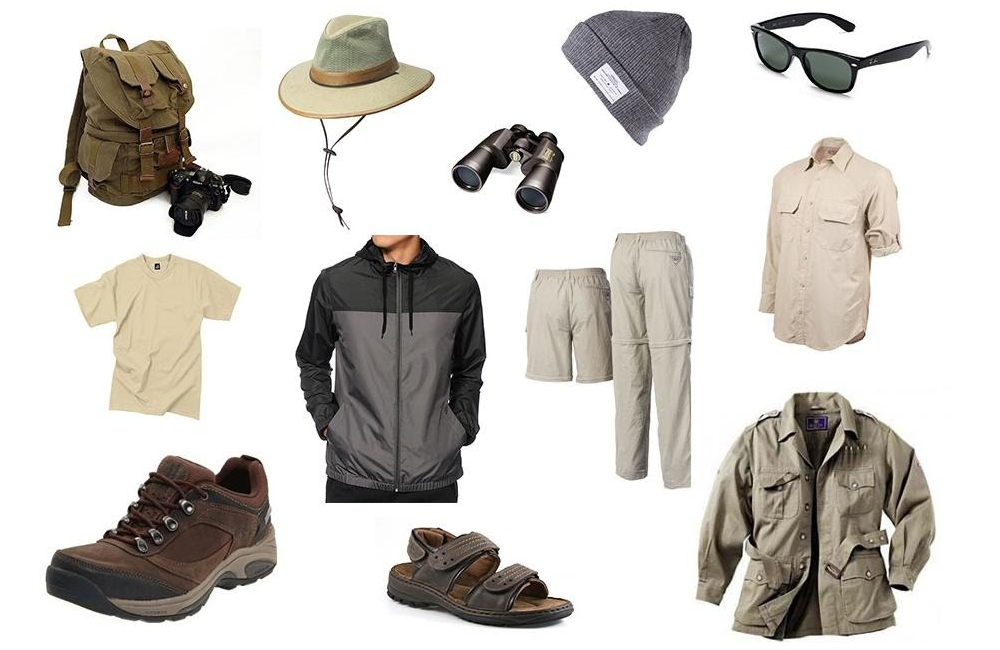
The following are some of the essential items to pack for a Tanzania holiday.
- Reusable water bottle
- Insect repellent
- Sunglasses
- Sunscreen
- Toiletries like lotion
- First aid kit with prescribed medicine
- A camera and extra batteries for capturing interesting moments while on a journey
- Binoculars to help you spot wildlife from far
- Travel documents like travel insurance, a passport, and a visa. A visa is required for travelers from different countries to enter Tanzania, and it can be obtained online or at the airport upon arrival.
Where to Stay When on a Vacation in Tanzania?
The following are some of the accommodations where you can stay on your Tanzania vacation.
Most of these accommodations, like hotels, campsites, and lodges, are built to give comfortable sleepovers and dinners for a memorable journey. Some of these accommodations have amenities like free internet access, airport transfer, and restaurants, among others.
| Safari Destination | Where To Stay |
| Serengeti NP | Serengeti Serena Safari Lodge and Four Seasons Safari Lodge |
| Ruaha NP | Ruaha River Lodge, Tandala Tented Camp, Utulivu Mbinguni Cottages, and Jongomero Camp |
| Udzungwa Mountains NP | Udzungwa Mountain View Camp, Udzungwa Falls Lodge, and Twiga Hotel |
| Mount Kilimanjaro NP | Kambi ya Tembo, Masai Bomas, and Kilimanjaro Mountain Resort |
| Arusha NP | Ngurdoto Mountain Lodge, The African Tulip hotel, and Lake Duluti Serena Hotel |
| Mikumi NP
| Stanley’s Kopje and Vuma Hill Tented Camp |
| Tarangire NP
| Sangaiwe Tented Lodge and Tarangire Sopa Lodge |
| Lake Manyara NP
| Kirurumu Tented Lodge and Ango Tree Hotel |
| Selous Game Reserve | Jimbiza Lodge, Selous Kulinda Camp, and Sand Rivers Selous |
| Gombe NP | Mbali Mbali Gombe Lodge, Bangkok Lodge, and Baraka Lodge |
| Katavi NP
| Flycatcher Katavi Camp, Neema Executive Lodge, and Katuma Bush Lodge |
| Mahale Mountains NP
| Greystoke Mahale Camp, Mbali Mbali Mahale Lodge, and Mahale Mango Bandas |
| Zanzibar Island | Melia Zanzibar, Tembo House Hotel, and Kendwa Rocks Beach Hotel |
What Is the Best Time to Go for a Tour in Tanzania?
The Dry Season
The best times to visit Tanzania for excursions are generally the dry seasons from December to March and from June to October, when the climate is mild and mostly dry.
June to October is good for game viewing, especially the wildebeest migration and the predators in the western and central Serengeti. During this very time, vegetation also thins, creating an opportunity for amazing sightings of beasts.
December to March is a good time to witness the calving season, most especially in January, in the southern Serengeti and the Ndutu Plains.
It is during the dry season that game viewing is at its finest, so you should plan for your journey wisely.
The Wet Seasons
Tanzania can still be visited during the two rainy seasons, with the main rainy season (March to May) being a good time for bird watching.
During the short rainy season (November to December), expect lush green landscapes and fewer tourists. This season also triggers the beginning of the wildebeest calving season.
Best Tour Companies to Help You Organize Your Tanzania Holiday
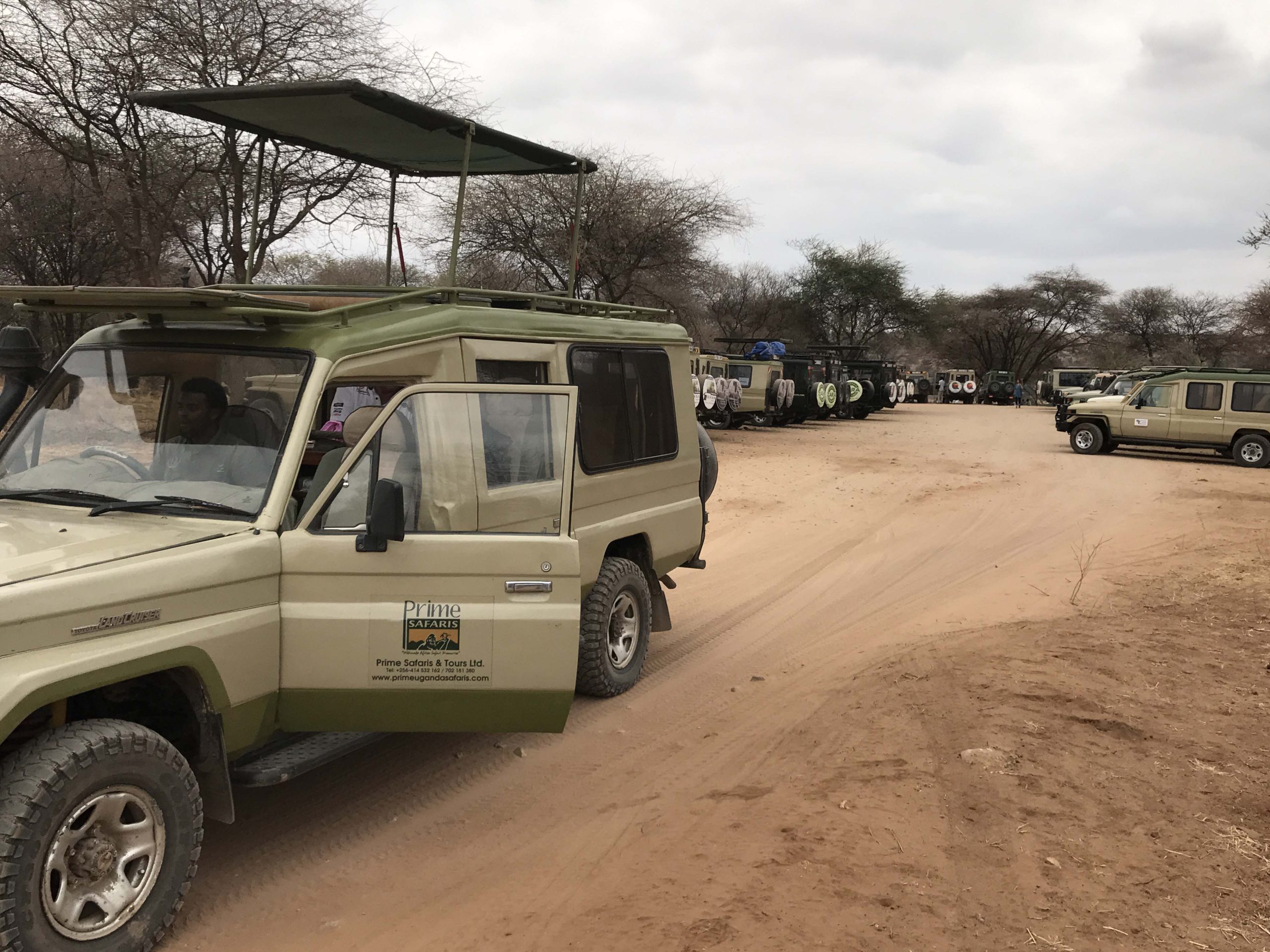
It is advisable to choose a tour company with comfortable, well-equipped vehicles to make your holiday a wonderful experience. The following tour companies are among the top-ranking companies known for planning interesting Tanzania trips and tours in other countries in Africa.
The above safari operators can greatly enhance one’s safari experience by providing knowledgeable guides and tailored itineraries. These will give guidance that is specific to Tanzania’s culture and environment.
Safaris in Tanzania FAQs (Frequently Asked Questions)
How Much Does a Safari in Tanzania Cost? | How Much Is a Safari Tour in Tanzania?
The cost for a Tanzania trip varies depending on the time and one’s itinerary; however, a one-day safari may cost from around $300 to over $1500 per person.
What is the Best Time to Safari in Tanzania?
The best time to visit Tanzania for a safari is during the dry season, from June to October. During this time, the vegetation and a variety of beasts tend to gather around the water holes, which makes it easy to spot them.
However, the wet season from April to May and November to December is a perfect time for those interested in activities like bird watching, indoor activities, and those with a low budget.
Why Are Tanzania Safaris So Expensive?
Tanzania tours are so expensive due to factors like high park fees, long transfers due to the country’s large size, remote accommodations, and high-season demand for the great migration and other excursions. These factors and many others combined contribute to the high price of a trip.
Which Safari Is Better, Kenya or Tanzania?
Both Kenya and Tanzania in East Africa offer unique and interesting safari experiences, but the question of which country is better depends on one’s priorities.
Some tourists choose KE because it offers shorter excursions, easy travel due to developed infrastructure, and potential for a budget-friendly trip.
Others opt for Tanzania if they prefer more remote parks and less crowded destinations, especially those interested in the Ngorongoro Crater and calving season from January to early March in Serengeti NP.
Does Tanzania Have a Good Safari?
Tanzania has an excellent safari, famous for offering some of the best game viewing tours in Africa, in its popular destinations like Serengeti and Ngorongoro Crater, where tourists can see beasts like the Big Five (lion, leopard, elephant, buffalo and rhino) and the wildebeests from Masai Mara National Reserve during the Great Wildebeest Migration.
Which Month Is Better for A Tanzania Safari?
The best months for a tour in Tanzania are June to October during the dry season, when the wildebeest migration happens. Other beasts can also be spotted around waterholes, especially in the central Serengeti.
January and February are also a perfect time for game viewing since it is the calving season in the southern Serengeti, and it offers an opportunity to see predator action.
How Many Days Should I Spend in Tanzania?
One may need 3-4 days or 10-14 days for a Tanzania holiday; however, the commonly recommended duration is 7-10 days, which allows one to explore multiple areas like the Serengeti and Ngorongoro Crater at a comfortable pace.
How Much Does A 7-Day African Safari Cost?
A 7-day African safari can range from around $1800 for a budget trip to $3,000 to $4,500 for mid-range and $10,000 per person for a luxury experience. The final price depends on the season and chosen destination, since different countries in Africa charge different costs for their trips.
How Much Is A 1-Week Safari in Tanzania?
A 1-week safari in Tanzania can range from $2000 to over $10000 per person, depending on the travel style. A budget safari may cost around $1,750 per person, $2,450 to $4,200 per person for midrange, and $5,000 to over $12,000 per person for a luxury safari.
Is Safari Cheaper in Kenya or Tanzania?
A safari is generally cheaper in Kenya than in Tanzania, primarily due to lower park fees, lower transportation costs due to better roads, and more reliable public transport.
A tour in Tanzania is expensive due to high park fees in famous parks like Serengeti NP and Ngorongoro Crater, longer transfer distances, and undeveloped infrastructure.
Is Tanzania Safe for Safari?
Tanzania is considered safe for a vacation, especially in the different wildlife areas, due to the presence of professional guides and rangers who ensure that the tourists are safe.
Other risks, like petty crimes in urban areas and health concerns like malaria, can be dealt with when you consult a reputable tour operator for standard precautions.
Is 7 Days in Tanzania Enough?
7 days is considered enough time for a vacation in Tanzania. This time will allow you to explore at least two to three game parks in the southern circuit or in the northern circuit, like Serengeti NP, and add a short trip to places like Zanzibar.
Conclusion
Embark on a Tanzania safari and get the opportunity to explore the different safari parks and other travel destinations, witness incredible attractions, relax on the pristine coastal island, immerse yourself in the traditional cultures, and have endless fun in the different travel destinations. Book your adventure tour now for an unforgettable travel experience.