Home » SUPPORTING LOCAL COMMUNITIES AROUND KIDEPO VALLEY NATIONAL PARK
SUPPORTING LOCAL COMMUNITIES AROUND KIDEPO VALLEY NATIONAL PARK
Supporting local communities around Kidepo Valley National Park is one of the main conservation and sustainable practices done by key conservation stakeholders in Uganda.
Kidepo Valley National Park is one of Uganda’s last real wildernesses. Tucked into the remote Karamoja region, it offers more than just incredible wildlife. It creates genuine opportunities for the people living right outside its borders.
Supporting these communities is done by stakeholders like the Uganda Wildlife Authority (UWA), conservation groups, hospitality groups, and private partners who work together with the local people around Kidepo Valley National Park.
When conservation supports those communities, everyone comes out ahead as tourism directly helps create a positive impact on the local people’s lives, as it helps build schools, give families income, and build health centres, among other things.
Every safari guest helps pay for projects that make everyday life better while keeping nature safe in Kidepo Valley National Park.
Essential Insights About Supporting Local Communities Around Kidepo Valley Game Park
- Supporting local communities around Kidepo Valley National Park is done by several conservation organizations and partners, such as UWA, African Wildlife Foundation, and Wild Places (Apoka Safari Lodge), among others.
- Some of the techniques used to support the local communities around Kidepo National Park include tourism revenue sharing, vocational & skills training, among others, which bring income to households without harming the wildlife habitat.
- Local communities that most of these organizations focus on include the IK people and Karamojong communities, and they directly benefit from the craft sales, cultural tours, and enjoy access to health centers and schools
- The main reason why organizations support local communities is to reduce the human wildlife conflicts and improve education and health access, while also improving the livelihoods of the communities with income generation.
- Traveling responsibly here helps fund rangers, anti-poaching teams, and community projects that protect the park for generations to come.
Here’s how communities around Kidepo Valley National Park are being supported.
Communities Around Kidepo Valley Park
The land surrounding Kidepo Valley National Park is home to strong, remarkable people who have adapted to this harsh landscape for generations.
The park sits in the semi-arid Karamoja District, bordering South Sudan to the northwest and Kenya to the east. That location defines daily life. Some of the indigenous communities in Kidepo Valley National Park include
The Popular Karamojong People
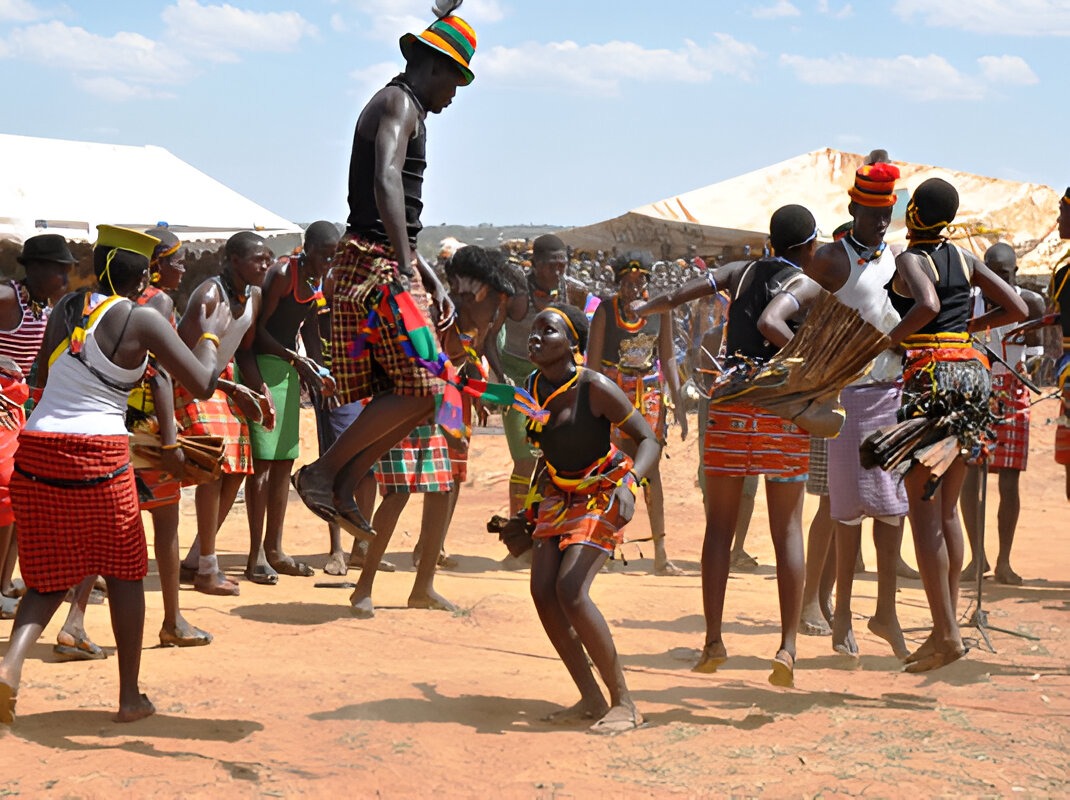
The Karamojong people are semi-nomadic herders whose lives revolve around cattle, warrior traditions, and rich culture.
They have a lot in common with the Masai of Kenya and Tanzania. Many families live in traditional homesteads that look like clusters of grass-thatched houses called Manyattas that house extended families.
When you visit, you’ll come across traditional instruments, clothing, jewelry, stools, spears, bows, knives, and detailed beadwork.
IK People
Another distinct group is the Ik, a small hunter-gatherer community living high on the slopes of Mount Morungole near the Kenyan border.
Their traditional way of life is under pressure from the modern world, but tourism gives them a way to celebrate and preserve their culture.
Local communities and villages like Lorukul, found just outside the Kidepo Valley National Park, strongly contribute to community-based tourism, making them key partners in supporting local communities.
Serious Challenges and Threats Facing Local Communities around Kidepo Valley National Park
Considering that most local communities practice grazing and farming on the land, the serious threats and challenges facing them in Kidepo Valley National Park are closely related to these aspects, and these include
- Serious drought
- Limited access to essential services
- Human wildlife conflicts, etc.
With these threats and challenges, the need to support local communities in Kidepo Valley National Park and minimize the challenges is important to protect the people and wildlife.
Key Ongoing Community Initiatives Aimed at Supporting Local Communities
A lot of different groups are working to support these communities while protecting the park.
Tourism Revenue Sharing
Money from tourism, including park entrance fees, goes back to local people through official revenue-sharing programs run by UWA.
That funding builds roads, water points, and services exactly where they’re needed. One great example is the partnership with the Lorukul village.
Lodges like Apoka Safari Lodge hire locally, provide training, and let guests take part in Karamojong daily life.
Visitors can help prepare traditional meals, help build a kraal, talk with elders or play with youngsters.
These cultural interactions give direct revenue and pride in heritage.
The village now has a clinic thanks to the partnership and the visits of a regular doctor, and a new school is coming.
Direct Cultural Tourism
Cultural tourism is a big draw here. Guests can hike up to meet the Ik people on Mount Morungole or spend time in homesteads learning about marriage traditions, bridewealth, raising children, and traditional songs and dances.
At the end of each appointment, families are given a small sum. Communities also sell beading, jewellery and crafts to create a consistent income from their cultural skills.
Community Guides
Training for local guides is important. Community wildlife scouts are taught to deal with human wildlife conflict, report threats and advocate for environmental and sustainable tourism practices.
That’s less risk for farmers and improved animal safety. UWA and environmental NGOs provide programs that train locals as guides, security assistants and instructors.
In some areas, community conservancies and wildlife areas give people a real voice in how land and tourism are managed.
Development of Education and Health Facilities
Education and health get consistent support. Partners have fixed up schools and built new classrooms so kids don’t have to travel far to learn.
Schools sometimes include conservation education and park tours, teaching young people why wildlife matters.
Health activities include clinics, maternal care and nutrition, making life better in these rural areas.
Direct Support from NGOs and Private Operators
Private operators and organizations like Wild Places Africa and the Uganda Conservation Foundation lend important aid.
They’ve supplied ranger equipment, backed anti-poaching patrols, and funded solar power projects.
Now they team up on tree planting, small businesses, and other initiatives that give families alternatives to activities that damage the environment.
Rangers and community people work together, using technology and traditional knowledge to monitor wildlife, stop poaching and respond quickly to problems.
When communities benefit, they are the best guardians of conservation, and these partnerships are proof of that.
People obtain skills, income and optimism. Elephants, lions and other creatures are safer.
Other Things to Know About Kidepo Valley National Park
- Access: Kidepo Valley National Park covers 1,442 km², with elevations from 914m to 2,750m. It’s Uganda’s most remote national park, about 700km from Kampala, but it’s worth the trip. Many visitors fly in; others drive and often stop at places like Ziwa Rhino Sanctuary along the way.
- Park Entry Fees Are Reasonable: The park entry fees for Kidepo Valley National Park include USD $40 for foreign non-residents, $30 for foreign residents, and UGX 20,000 for East African citizens (adult rates). These fees support UWA’s work and fund community projects.
- Highlights: The park’s landscape has sweeping golden savannas, the Narus and Kidepo rivers, and dramatic mountains. In the dry season, the Narus Valley attracts massive buffalo herds (10,000–15,000), growing elephant numbers, lions, Rothschild’s giraffes, zebras, and more. Birders can tick off over 476 species, including ostriches — the only place to see them in Uganda.
- Accommodation: While planning your Kidepo Valley National Park safari excursion, consider safari lodges that are actively involved in support of conservation and local communities like Apoka Safari Lodge. Many include guided tours of local towns as part of their programming.
- Best Time to Go: Kidepo Valley National Park is a park that may be visited all year round. The best time to visit the park is during the dry seasons when the paths are drier, the skies are brilliant and blue, and the temperatures are just suitable for outdoor activities like cultural tours, game drives, wildlife viewing, and others.
- Uganda Tour Operators: Some of the travel agents that arrange community-benefiting tours include Wild Gorilla Safaris, Prime Safaris and Tours Ltd, Safari Uganda Safaris, Gorilla Safaris and Tours, A Uganda Safari, Africa Safaris Tours, Uganda Birding Safaris, Gorilla Trekking Uganda, etc.
Whether you’re watching lions on rocky outcrops, hiking to meet the Ik, or just sitting quietly in the wide valley, you’ll leave knowing you helped something enduring. The heart of Kidepo Valley National Park isn’t just its wild beauty; it’s in the local communities that call it home.
Come for the safari. Stay for the people. Help secure the future of the local communities in Uganda’s Kidepo Valley National Park!
Want to visit Kidepo?
Want to visit Kidepo Valley National Park, Uganda's finest game viewing safari park?
